Learn

Ann Weiss teaches seminar to students at Royal Palm High School, Florida. Over 60% of the students at Royal Palm are Title I (live under the poverty level).
Holocaust Photo & Interview Project
During the pandemic, most of our programs were either canceled or postponed. The one notable exception was a year-long Holocaust Photo & Interview Project we did with 8th graders in urban Chicago’s Bernard Zell Anshe Chesed School. Working with History teacher, Dr. Jeff Ellison and Art teacher, Gilli Sherman, we taught the students about the photos in the Eyes from the Ashes collection, how to carefully study and ‘read’archival photographs, how to conduct good interviews, how to research Holocaust history and finally, how to take meaningful photos of their own. The culmination is a stupendous photo exhibition created by the students, complete with QR codes that both summarize the survivor’s story, and also their own ‘Artist Statement.’ Here is a 9 minute video summary about this project and what it meant to them. I can only add that, to me, it was one of the most meaningful projects of my entire career!—both working with these extraordinary educators and working with these extraordinary students. I hope you’ll sit back, take a few minutes to watch.
In order to hear the Survivor Stories and Students’ Artist Statements, please CLICK HERE
All That We Share
This appeared on Danish TV. Watch it, share it with others; it WILL be worth the moment you spend
Ann Weiss teaches seminar to students at Royal Palm High School, Florida. Over 60% of the students at Royal Palm are Title I (live under the poverty level).
Holocaust Education in the time of COVID-19 — April 2020
During this corona pandemic, I’ve had teachers contact me and ask whether they can use my material in their virtual teaching, now that most (all?) schools are closed for the rest of this academic school year.
My answer is a resounding YES (By the way, my answer has always yes, not just during this time of pandemic).
Some teachers have my book; some teachers only have access to my web site (www.thelastalbum.org”). Whatever you have, feel free to use it. And let me know how I can help.
Individual teachers have written to ask specific questions that are relevant for their own students. Because their questions are so specific, I have been writing back to them privately. However, if a question seems to have relevance to a wider group, after getting the teacher’s permission, I will post it here, so it can benefit all of you.
In the meantime, if you are searching for a specific kind of story to share with your students or need a picture from my book, please let me know and I will try to help in any way I can.
Good luck to us all.
As we hear time and time again, on every newscast, and in every public service ad: WE ARE IN IT TOGETHER! Indeed we are!
A DAY WITH SOME STUDENTS
After speaking to a group of high school students, Ann Weiss passes out a selection of photos from The Last Album collection for students to examine.
They are asked to choose a photo that particularly strikes them, interests them, moves them—or in some way, engages them. Then they explain why.
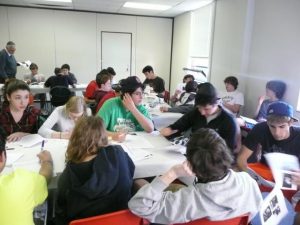
Ann goes around room to speak to students individually about their choices, and answers their questions.
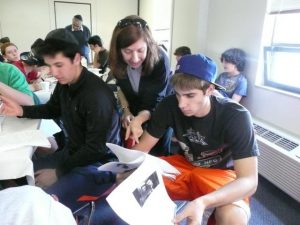
These four students chose to work together. Their questions and their comments built upon each other’s, and enlarged the project for this group.
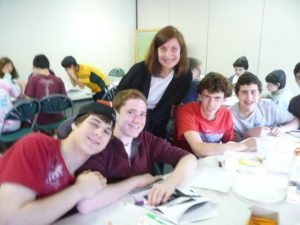
An individual student responds to a photo.
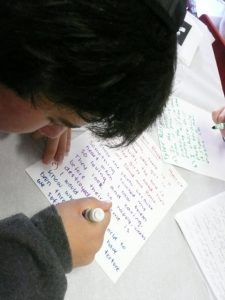
Once the students finished (and with student, parent and faculty permission), their powerful responses were exhibited, together with the photos they chose.
LEARNING/PEDAGOGY
Here are ideas and material to enhance your teaching/learning/understanding of The Last Album:Eyes from the Ashes of Auschwitz-Birkenau.
Together with my own suggestions, I’ve included ideas from other educators and students to spark your own ideas. In addition (at the end), I’ve included extra material which I hope will enhance your understanding, like an overview of Bedzin History, a Chronology of Important Dates, a UN essay on “Why Teach the Holocaust” and a list of helpful web sites.
As I receive your suggestions, curriculum ideas and lesson plans, student writing, pedagogical ideas, and the like, I will be happy to share them with you as well.
Introduction
Teachers have expressed interest in developing lessons for the classroom using material found in The Last Album — in the book, exhibition, and film. As these teaching ideas arrive, I will continue to share them with you. Right now, I begin with a few suggestions that have been effective when I teach students.
Unless otherwise noted, the ideas are appropriate, with only minor modification, for most students, ranging from those in the middle grades through university.
Note: Educators have also had success in adapting The Last Album’s stories and enrichment activities to the needs/interests of adult and special learners as well.
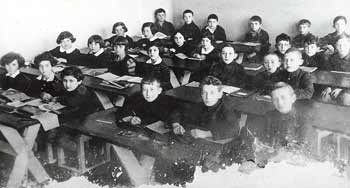
A-Students Respond to Individual Photos
In a variety of settings, I have asked students to choose a specific photo (though sometimes they ask to spotlight more than one, which is also fine) to which they respond most powerfully. Sometimes it is a photo that tugs at their heart. Sometimes it is a photo that reminds them of a person (or pet) in their own life. And sometimes, it is just a photo they cannot get out of their mind.
In any case, regardless of how they made the decision, I’ve asked students to choose a photo that touches them. [The photo can come from the book, film or exhibition – and this idea works equally well with any one of these sources].
Writing:
Then I ask the student to respond in writing, because I’d like each individual to have a chance to respond in a personal, taking into account not all students feel comfortable expressing their ideas out loud or in public.
I try to guide students’ writing, by suggesting a series of questions. Questions vary, depending on the group’s age and ability, the specific subject we are trying to emphasize (History, English, Sociology, Language Arts, or whatever) and the amount of time we have available.
Some very compelling responses have come from very simple questions:
- Why did you choose this particular photo?
- What does this photo “say” to you?
- [Here I ask students both about the visual aspects of the photo – clothing, setting, other people in the photo, to teach them how to read visual clues – as well as the non-visual aspects of the photo: What’s going on in the photo, in terms of relationships, impact of events, etc.What do we know for sure? What reasonable assumptions can we make about the photo?]
- Why do you suppose the person chose this particular photo to take to Auschwitz?
- What photo would you bring if you were going to a new place without your friends or family? [Make it clear they are NOT going to a place like Auschwitz, but rather imagine moving to new city, going to college, etc.].
- What suppositions can you make about who brought this photo? From the content, we can sometimes infer who brought the photo.
From the content, sometimes we can infer none of this information. Asking the students to examine this aspect helps them to understand how little we know, or can ever know, in many cases, and thus helps make them better appreciate better what we do and do not know. - If you could speak to this person, what would you want to know?
- If you could speak to this person, what would you want them to know about you?
With your students’ permission, I’d be very happy to see some of their responses and share them either anonymously or with attribution, as you (and they) wish.
Non-Writing:
It is a very moving experience, as anyone knows who has observed students’ reactions to sensitive material, to read their words, to hear their thoughts and also to witness their non-verbal (visual and otherwise) responses the photos.
Some of the best results have come when I have given very little direction. For example: Respond to the photo you chose in any way you wish.
**From a Chinese girl, whose family was still traumatized by the effects of living with repression in Communist China, I received an achingly beautiful calligraphy, which expressed her identification with the photos, and highlighted her sense of identification with the displacement of Jews forced out of their homes. With words and images, as she explained in her art, she expressed the wish to find a sense of “home” in her own life and in her new country. Although her English was quite limited, her eloquent visual expression was quite remarkable.
Especially when working with less verbal students, I try to give students some opportunities to respond in non-traditional ways, using both their verbal and non-verbal skills. Meaning is important in any format; meaning is important in every format. It matters for us as educators, and for us simply as human beings, to try to better understand what our students are trying to tell us. In other words, it is important to pay attention to both the text and the subtext —both of what is being said, as well as what is NOT being said.
**The captain of a college football team, who surprisingly responded most powerfully to a photo of an aged Hasidic rabbi, with black hat and flowing, white beard, explained “I like this picture the most because it’s what I wish I had in my life. Not the black hat or the beard, but I can tell this guy really believes. I go to Church every week, but I don’t know what I really believe. And it’s so clear in this picture that he does. I really envy him!” – Now who would have expected this college football star would be envying this old Hasidic Jew? Certainly not me.
Although I am prepared for many diverse reactions, this student’s response has taught me a lot. And so I urge you, as you use these unique photos to teach many kinds of lessons in diverse subjects, that you try not to limit possibilities. As educators, we know that students are often our best (and hardest) teachers.
For me, one of my greatest joys in teaching is never knowing what is going to penetrate, what is going to be most deeply felt, by the students. I believe that by asking open-ended questions, by gaining (and trying to be worthy of) students’ trust, and by listening, one might be privileged to hear some of the deepest wishes, fears, needs and hopes of an individual. One caution: be gentle with what you hear. And of course, it goes without saying that this kind of assignment should NOT be given for a grade, only for insight. Additionally, because many of these responses are private disclosures, they should not be shared publicly, if at all, without students’ expressed permission.
Creating Memories:
The title, The Last Album, points both to the fact that this book serves as the last album of the individuals whose photos are contained within, and it is, in fact, an album.
A-Students create a memory album for photos in the book (suggest that they choose a focused families in second half of the book, since there is more detailed information about these photos). By researching the historical times, cultural institutions, religious practices and youth group activities, etc, and creating an album of sorts, students gain an appreciation and familiarity with life during the interwar period. Rather than submitting a traditional written paper, this album concept allows their research to be presented in a creative and original format, integrating both narrative and visual expression. (Grading this historically based album is acceptable).
B-Invite the students to create their own memory albums, combining diverse elements from their own lives, to parallel the historically based album above, or as a separate activity altogether. (This personal album should not be graded, but rather offered as an option for extra credit).
The following is a guide to help students, when asked to choose a photo of significance, to determine why this photo matters to them–as well as what memories, stories, thoughts it triggers in them.
When recently asked to choose such photos of significance, students in middle school came up with reasons their photos were significant. Reasons clustered around three areas:
FAMILY–especially shots with their siblings with whom they had conflict but affirmed ‘they have my back, I have theirs’
PEOPLE THEY LOVED and MISSED–especially photos of ‘the last time I was with…(fill in the blank–my grandfather, my dog, my friend),
PLACES WHERE I WAS SO HAPPY–this trip, this adventure, this experience, this whatever…made me feel good.
(Note: this same exercise can be used with all ages–and answers can be discussed instead of written, or BOTH written, and then discussed–as I chose to do recently)
Click here to download the exercise.

From Ann: I have not seen the book nor do I know any details other than what is written below by the author, Mary Fulbrook.
A small town near Auschwitz: 70 years on
Posted on Monday, August 13th, 2012 at 3:30 am
By Mary Fulbrook
Take a trip to the Polish town of Będzin today, and there is not a lot to see. The ruins of the old castle rise above the town; a Lidl supermarket helps the casual traveller searching in vain for an open pub or restaurant. And for anyone arriving by public transport, the bus terminus and neighboring railway station seem about as desolate as can be. This certainly does not seem to be a key location on the trail to Auschwitz, now the epicenter of what might be called ‘Holocaust tourism.’
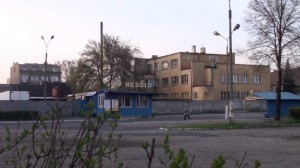
Będzin Bus Terminus. Photo courtesy of Mary Fulbrook.
But think back seventy years, and things looked very different here. What is now the bus terminus was then the Jewish ‘Hakoach’ sports field – Hakoach meaning, roughly, ‘The Strength’. And on this sports ground, on 12 August 1942, some 15,000 Jews were brought together under the cruel pretext of an identity card check. They were forcibly held there for several days, without food, water or shelter, surrounded by armed police, members of the Gestapo and the SS; those who sought to resist, or to flee, or who even stood up or sat down at the wrong times, were brutally beaten or shot dead on the spot. One by one they had to come up to a table where they were directed into different groups, with the elderly, the infirm, and the very young pointed to a corner headed for death. A further 8,000 Jews faced a similar ordeal at another nearby sports ground; there were also selections in the neighboring town of Sosnowiec at this time.
In an ‘action’ that lasted nearly a week, from 12 to 17 August 1942, some 4,700 Jews from Będzin were sent down the railway tracks to the extermination camp of Auschwitz-Birkenau, a mere 25 miles to the south. Thousands of others were chosen for the slave labour camps run by the SS across Upper Silesia, a part of the Greater German Reich. The rest were allowed to go home – for the time being – as still potentially useful workers in the locality. Within a year they too would be headed for the gas chambers, wiped out in the final ghetto clearance of the summer of 1943.
One of those at the Hakoach sports ground was a teenager by the name of Rutka Laskier. She recalled the selection of August 1942 a few months later, in a diary entry written in the ghetto.
After describing her own experiences, she added:
Oh, I forgot the most important thing. I saw how a soldier tore a baby, who was only a few months old, out of a mother’s hands and bashed his head against an electric pylon. The baby’s brain splashed on the wood. The mother went crazy. I am writing this as if nothing has happened. But I’m young, I’m 14, and I haven’t seen much in my life, and I’m already so indifferent. Now I am terrified when I see ‘uniforms’. I’m turning into an animal waiting to die. One can lose one’s mind thinking about this.
Rutka died in Auschwitz just a few months later. Another Jew, who was lucky enough to survive, later recalled the days following the deportations of August 1942 in her memoirs:
For the next several days Będzin was a city of tears. Mostly people just stayed in their homes mourning and praying. I would say that, at the most, only about one fourth of the people from our apartment complex returned to their homes the night of this devastating selection. The rest were on their way to Auschwitz or a slave labour camp.
By the time the area had finally been rendered ‘Jew-free’, a total of perhaps 85,000 Jews – more than were deported from the whole of France – had passed through the linked ghettos of Będzin and Sosnowiec on their way to Auschwitz. [Note from Ann Weiss: This figure of 85,000 is higher than what I understood the total number of Jews to be, but it’s very possible that Mary Fulbrook, in her research, had access to more recently released records than were available when I did my principal research].
There is nothing at Będzin’s decrepit bus terminus or forlorn railway station today to commemorate the frightful events of those days in August 1942; nothing to indicate what had gone on in this place of terror. There are no memorial ‘sights’ at what should have been a key ‘site of memory’.
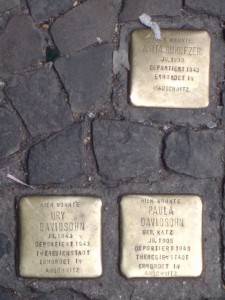
Contrast this with the veritable rash of ‘stumbling stones’ (Stolpersteine) across the streets of Berlin (below), commemorating former Jewish residents who were killed, or the massive Memorial to the Murdered Jews of Europe, located by the Brandenburg Gate at the very heart of Germany’s capital city. The Federal Republic of Germany has (belatedly) come to identify overwhelmingly with the victims of Nazi persecution.
Even so, there remain massive difficulties in Germany with confronting the personal legacies of parents and grandparents who had supported the Nazi regime. One such conformist was the former principal civilian administrator of Będzin, who had implemented the ghettoization of the Jews in his area while growing increasingly uneasy about the transformation of everyday racism into policies of mass murder. His own role at the time, his ambivalence, and the subsequent gaps in his memory of these events, shed much light both on how it was possible for Hitler’s murderous policies to be effected, and how so many Germans after the war could profess that they were ‘always against it’ and had ‘known nothing about it’.
How should we remember these events of seventy years ago? Should there be a plaque at the Będzin bus terminus, or the railway station, to the deportation of tens of thousands of victims of Nazism – or should today’s inhabitants be able to live undisturbed by the ghosts of the past, untroubled by the murder of half the former residents of their town? Memorialization is anyway always partial, in both senses, selectively highlighting aspects of the past while serving particular interests in a later present. Certainly the reintegration of former Nazis helped establish a powerful democracy in postwar West Germany, even while it explicitly rejected its Nazi heritage.
Perhaps letting the dust settle on this awful past was the best way to try to heal the wounds – at least among those who were not too scarred by its tragedy. Or does this desire to cover or ignore the traces do an injustice to the pain of survivors and the memory of so many victims?
Mary Fulbrook is Professor of German History at University College London. She has written widely on modern German history. Her most recent books are A Small Town Near Auschwitz Ordinary Nazis and the Holocaust (OUP, 2012) and Dissonant Lives: Generations and Violence through the German Dictatorships (OUP, 2011). A fellow of the British Academy, she is former Chair of the German History Society and a member of the Academic Advisory Board of the Foundation for the former Concentration Camps at Buchenwald and Mittelbau-Dora.
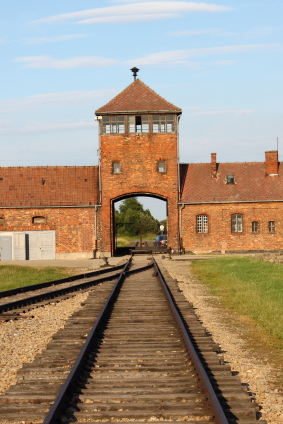
Images: Będzin Bus Terminus, photo courtesy of Mary Fulbrook; Entrance to Auschwitz-Birkenau concentration camp, by alessandro0770, iStockphoto; Stolpersteine, Berlin, from the private collection of Mary Fulbrook.
The following remarks were spoken by my friend, Joe Finkelstein, at Zion Baptist Church, as part of our synagogue’s commemoration of Martin Luther King’s birthday on 1-17-10. It is because of Joe’s father’s focus on life that I share this story with you here:
As some of you know, I am the child of two Jewish concentration camp survivors, originally from Poland, who came to America and rebuilt their lives after the Holocaust in a new world.
My parents were 13 and 10 when the war started. They lived through years of darkness, suffering and loss. They had to walk in the gutter, no Jew was permitted to walk on the sidewalk. They could not go to school, Jewish children were forbidden to learn. They wore a yellow armband with the Star of David and the word ‘Jude’ on it – it was meant to be a mark of shame. They were made to scrub the streets on their hands and knees. They were forced to work in slave labor farms, camps and factories. They endured raids, beatings, ghettos, cattle cars, selections, and starvation; and death marches in dead of winter with no coats, shoes, food or water. They survived the infamous concentration camps of Auschwitz, Mauthausen and Bergen-Belsen. My father was tattooed with a number. I asked my father what it was like, he said, “We were nothing but cockroaches. A sane person cannot imagine what it was like.”
Sixty-five (65) years ago, on this very day, January 17, 1945, my father was caught stealing linens in Auschwitz from the laundry, and trading them for food. He admitted the theft, he said he did it because he was hungry. The linens belonged to the commandant of the concentration camp. The Nazi told my father, “Jew, you have a choice, you can be hanged or you can be shot.” My father, a 19 year old boy, said on that particular January 17th, “if I have a choice, I choose life.”
It is a great blessing, sixty-five years later to the day, to be here, to live in this time and be standing in this place. It is a great blessing to be with people who understand that persecution, discrimination, and exploitation are evils that must be resisted and fought, that the pursuit of justice is our struggle and our duty.
The 19-year old boy in the story is Sol (Avshalom) Finkelstein from Radom, Poland; his wife, Goldie Cukier Finkelstein, is from Sosnowiec, Poland – an area of Poland that is prominently featured in The Last Album.
To read more of Sol and Goldie Finkelstein’s story, see I Choose Life: Two Linked Stories of Holocaust Survival and Rebirth by Jerry Jennings and Goldie and Sol Finkelstein, with Joe Finkelstein.
It can be purchased through Joe’s web site www.ichooselifebook.com , or the publisher’s web page where you can read an excerpt of the book, www.xlibris.com/ichooselife.html or Amazon.com, where there are reviews posted, and additional information.
Publisher: Xlibris Corporation (March 19, 2009)
ISBN-10: 1441503056 ISBN-13: 978-1441503053 [soft cover]
ISBN-10: 1441503064 ISBN-13: 978-1441503060 [hard cover]
THE COURAGE AND HUMANITY OF AVRAM ROGOZINSKI
(as shared with Ann Weiss by Dr. Maura Copeland and Flori Schwartz)
Abraham/Avram Rogozinski is an 85-year-old Holocaust survivor who has always found it very difficult to talk about his many vivid, painful experiences in multiple concentration camps during the Holocaust. I heard about one of his experiences several years ago and have been haunted by the story ever since. It is a simple story that unfolds like a fable with a powerful message about friendship, courage and faith…Abraham Rogozinski was at first hesitant but has since found the courage to meet with the 8th grade students at Cohen Hillel Academy, allowing them to interview him, write his story and illustrate it to preserve it for future generations.
This particular part of his story is only a page long but leaves an imprint that lasts much longer. I have reprinted it below for you.
ABRAM”S STORY AS TOLD TO REBECCA ROSEN of TEMPLE SINAI: This is an account of an experience I (Rebecca) had last Shabbas at Temple Sinai. After the davening, the congregation went into Founder’s Hall for Kiddush. It was the Shabbos of VaYELEK – where we read that G-d said “Vi Ani Hstar Astir Panay – I will hide my face”.
Abram was very agitated and motioned me to him – he had a story that he wanted to tell me, and he wanted me to hear it – so he took me over to a side of the rooms saying “You are the only one who will understand – I wanted to tell this story to the others, but it’s difficult for me to do so.”
His story basically is as follows:
It happened during the time that he was a teenager in the concentration camp in a place called “the King’s Forest.” It seems that the “work” that the Jews did in this labor camp was to cut wood from the trees and carry it to the other side of the forest. The wood was then transported and used to aid the Germans in the war. It was a hard job – everyone worked from dawn to dusk doing it. The Germans tormented them and called them all kinds of degrading names, including “foiler” which meant lazy.
One dreary day, the guards shot a sick Jew because he wasn’t producing for them and threw him into a big pit. Every Jew knew what had happened, but what could they do? – They went on with their work.
There was a Jew named Noocham who was very tall – (at this point, Abram grabbed a young tall man from the Kiddush line and placed him beside himself and said “See how much taller he is from me”). Well, this young man “Noocham” was Abram’s friend. When they stacked the piles of wood on their shoulders, they measured the piles according to his height so they were all uniform as they marched through the forest to transport the wood to its destination. Because Noocham was so tall, he obviously seemed to be holding less wood than the others.
The SS soldier in charge of the detail noticed this – but that day he took great notice of it – he became very angry and said – “You- Noocham! You are a Foiler – Go into the pit with the dead Jew and put your knees to the ground!” Everyone stopped and was scared. Noocham did what he was told. At that point, Abram dropped his load of wood and jumped into the pit with Noocham saying “he is my friend – we need him – we measure the wood by his height!!”
Upon seeing Abram do this – the Jewish cook from the camp also jumped into the pit and said “Abram is my friend, I need him – he helps me in the kitchen.â€
The SS guard got “very distracted” – â”G-d turned his head around – and made the SS guard confused – and he didn’t kill any of us” exclaimed Abram.
When the war was over and they were liberated – all of the inmates of the camp went to different DP camps and Abram lost touch with his friend Noocham.
Years later in America, Abram and his wife had gone to the Concord Hotel in upstate New York for a Holocaust survivors reunion. He was strolling with his wife, admiring the lovely flowers around the pool, when he overheard a voice nearby. “That voice sounds familiar” he said to his wife. Lo and behold, that voice was Noocham’s. They hugged and kissed. Noocham also had gone to America, had married and had a family.
After the story was told, Abram was much relieved. I said to him – “Abram – G-d didn’t hide his face. G-d shined his face upon you – he saved you – and you saved Noocham and the cook.!!”
Abram blessed me and my family and went home to his wife. After he left, I told the story around the Kiddush table. We are truly blessed to have in our temple such a man as Abram Rogozinski – who has lived and survived such stories.
This account was read to the Temple Sinai Congregation by Rebecca Rosen during the High Holidays Sept 2006 with the permission of Holocaust survivor Avram Rogozinski
Josey G. Fisher
Faculty, Gratz College and Moore College of Art and Design
Director, Gratz College Holocaust Oral History Archive
Holocaust Education Consultant, Auerbach Central Agency for Jewish Education
At the start of a one-week 3-credit graduate course for educators, and intensive summer experience, I showed them The Last Album, told the background story of the photographs — how they got to Auschwitz, how they were discovered, and your ongoing search to identify them. I explained that we were starting an intense immersion into the derpinnings and the process of the Holocaust that would involve historical, political, sociological, psychological issues — but at no point in our study did I want them to forget that this happened to PEOPLE, people who were not born to be victims, who had lives, families, parents, children, friends, jobs, picnics, weddings, who celebrated life.
I told them I would leave the book on the resource table throughout the week, and that they should make sure, at some point, to look at it.
Throughout the week, during class breaks and lunch hours, I watched as every class member, one by one, disappeared across the hall into the student lounge, curling up alone with the book, returning to class silently. If I caught their eye, the response was a shake of the head, in disbelief, in sadness.
Throughout my teaching, I tell stories — vignettes from oral histories and memoirs. There are passages that we read aloud in class and at home.
To read excerpt of Ann Weiss’ Life/Narrative Seminar for Educators in Conflicting Populations, please Click Here
When asked to teach tolerance to educators from conflict-ridden areas, I led a three day seminar for Palestinian and Israeli educators, as well as Greek and Turkish Cypriot educators at the Peace Palace in Cyprus. As a collaborative teaching, we created abbreviated life narratives. To read excerpts, CLICK ABOVE.
QUESTIONS for students after reading THE LAST ALBUM or seeing Weiss video, EYES FROM THE ASHES, suggested by Maureen Marullo Carter, Palm Beach County.
You can click QUESTIONS to download a PDF version of student questions.
James ‘Sam’ Parish of Naples, Florida, Educational Consultant at the Holocaust Museum and Education Center of Southwest Florida created this Educator’s Guide to be used in conjunction with the photographic exhibition, book or photo-montage of The Last Album: Eyes from the Ashes of Auschwitz-Birkenau.
Explore The Last Album book, DVD or traveling photographic exhibit which consists of photographs, historical maps, research, drawn from 2400 photographs discovered by Ann Weiss. Examine how these photos inject life into the lives of those who became Holocaust victims at Auschwitz-Birkenau.
Suggested ideas:
In their Shoes
Chose a personal photo in advance to bring, without students knowing activity to come.
➢ Describe the photo (what is happening, who is pictured by name and relationship to you, what is the location, when was the event pictured taking place, other identifying information).
➢ What is the story associated with the photo? If you don’t know or there isn’t one, does the photo remind you of a story or event associated with the photo? Why was the photo taken?
➢ Why did you choose this particular photo for this activity? Why is it special or meaningful to you? How does it make you feel? What does it make you remember?
➢ What does the photo say about you? Think historically, act locally…
• Post-visit, distribute disposable cameras, or alternately, have them use their cell phone camera to document daily life in their community (consider large events like parades but also subtle, neglected locations and events. Have them experiment with different views, angles, perspectives, etc.
• Have students print, develop, create a slideshow or collage, title their work, and explain the meaning behind the picture. Which of those pictures would they treasure the most?
Photo detective
Watch ‘Eyes from the Ashes’ DVD, see The Last Album (book) or walk through photo exhibit. Choose a favorite photo and answer following questions (idea credit of Ann Weiss, author, and Maureen Marullo Carter of Palm Beach Schools)
❖ Why do you suppose the person chose this particular photo to take to Auschwitz?
❖ What photo would you bring if you were going to a new place without friends or family? (Not a place like Auschwitz)
❖ If you could speak to this person, what would you want to know about them?
❖ If you could speak to this person, what would you want them to know about you?
❖ What does the video tell you about these people that were on one of the last transports into Auschwitz? Were they like you?
For further information, please contact James ‘Sam’ Parish, Education
Specialist, 1-239-263-9200 x 206 sam@holocaustmuseumswfl.org
Holocaust Museum & Education Center of Southwest Florida
4760 Tamiami Trail N, Suite 7 / Naples, FL 34103
To download a pdf of the full guide, please CLICK HERE.
“Why Teach about the Holocaust?” was just published on line on the website of UNESCO. The brochure is destined to policy-makers and ducators interested in introducing the history of the Holocaust in their teachings and curricula.
This document was prepared in partnership with Stephen Feinberg (formerly at US Holocaust Memorial Museum) and benefited from inputs from Karen Polak (Anne Frank House), Richard Freedman (South African Holocaust and Genocide Foundation) and Paul Salmons (University of London).
CLICK HERE TO SEE THE FULL DOCUMENT
The following resources are extracted from this document courtesy of UNESCO, Holocaust Education Division, Karel Fracapane
RESOURCES FOR TEACHING THE HOLOCAUST AND OTHER GENOCIDES
Given the international audiences that UNESCO addresses, electronic resources, accessible worldwide, are a convenient and economically sound source of information on the topics of the Holocaust, genocide, and mass atrocities. However, it is vitally important to access accurate and historically correct information on the Internet. Many of the following websites provide reliable information in several language versions.
The website of UNESCO is a good place to begin an exploration of Holocaust and human rights education. It provides an international structural framework for examining the connection between the Holocaust and genocide and human rights issues.
www.un.org/en/holocaustremembrance
Detailed information on the United Nations Outreach Programme about the Holocaust can be found at this website. Educational materials as well as professional development opportunities are presented.
www.un.org/en/preventgenocide/adviser/index.shtml
Website of the Office of the United Nations Special Adviser on the Prevention of Genocide.
www.holocausttaskforce.org/education.html
The website of the Task Force for International Cooperation on Holocaust Education, Remembrance, and Research contains much practical information on all aspects of Holocaust education. In addition, it contains information on“The Holocaust and Other Genocides”.
The website of the United States Holocaust Memorial Museum has extensive in-depth historical information about the Holocaust. It provides easy access to primary source documents, including photographs and maps that deal with the Holocaust. It also has broad information on genocide
and mass atrocities.
The world’s largest repository of information on the Holocaust, Yad Vashem’s website provides easy access to digital collections, e-learning for professionals, a database of Shoah victims’ names, and a wealth of historical information in several languages.
The Shoah Memorial provides access to various resources on the Holocaust, mostly in French. It includes a website for primary-school children: www.grenierdesarah.org and for secondary school teachers: www.enseigner-histoire-shoah.org
An online overview of institutions throughout the world that deal with the history of the Holocaust, created by the Topography of Terror Foundation in Berlin, Germany.
The website of Project Aladdin, a multi-faceted cultural initiative launched under the patronage of UNESCO with the aim of countering Holocaust denial and all forms of racism and intolerance, while promoting intercultural dialogue, particularly among Muslims and Jews. In
English, French, Arabic, Turkish and Farsi.
The Anne Frank House is an independent organization entrusted with the care of the Secret Annexe, the place where Anne Frank went into hiding during World War II and where she wrote her diary. It brings her life story to the attention of people all over the world to encourage them to reflect on the dangers of antisemitism, racism and discrimination and the importance of freedom, equal rights and democracy. The website annefrankguide.net is available in 22 languages and country versions.
The USC Shoah Foundation Institute for Visual History and Education holds the largest archive of testimonies of Holocaust survivors in the world. It provides access to a large number of video testimonies, lesson plans for teachers, various pedagogical resources. It includes also a section of
testimonies of survivors of Armenia, Rwanda and Cambodia.
The Institute of Education’s Centre for Holocaust Education is the first institution to combine extensive national research into teaching and learning about the Holocaust with new programmes, materials and resources designed to meet these classroom challenges.
A unique initiative on the African continent, the South African Holocaust and Genocide Foundation is dedicated to creating a more caring and just society in which human rights and diversity are respected and valued. Centres covered by the Foundation serve as memorials to
the six million Jews who were killed in the Holocaust and all victims of Nazism, teach about the consequences of prejudice, racism and discrimination, and promote an understanding of the dangers of indifference, apathy and silence.
www.instituteforthestudyofgenocide.org
The Institute for the Study of Genocide, an independent non-profit organization chartered by the University of the State of New York, located at the John Jay College of Criminal Justice of the City University of New York, provides a large webography on Genocide Studies, State Killings, and groups at risk, International Law and past genocides.
Genocide Watch aims to build an international movement to prevent and stop genocide.
Human Rights Watch provides news, analysis, reports and a wide variety of resources on human rights issues worldwide.
CHRONOLOGY OF IMPORTANT DATES 1924-1945
While the people in the photos that appear in The Last Album were living their lives, the political noose was tightening around the necks of Jews and others that the Nazis deemed undesirable. This chronology layers the larger template of world events over a selected personalized history of the Zaglembia region, from which many of the photos originated.
Though it is not yet complete, it helps to give a perspective regarding the photographs.
1924
- Finance Minister Grobsky makes conditions difficult for Jews. Many Polish Jews leave and go to the land of Israel. This mass emigration is jokingly called “Aliyah Grobsky,” “aliyah” meaning “going up” or “ascending” to the Holy Land of Israel. (See Cukierman account)
1927
- Poland’s economy suffered without its Jews. Finance Minister Grobsy rescinded the anti-semitic laws, making it more advantageous, less restrictive for Jews to conduct their businesses. As a result, a numbe of Jews left Palestine and returned to their lives and homes in Poland. This “going down,” is referred to as “Yerudah Grobsky,” using the negative term of “descending” when speaking of leaving the land of Israel.
1933
- January 30
Adolf Hitler is appointed chancelor of Germany. - February 27-28
Fire destroys Reichstag (German parliament and the building where it met). All the Communist members of the parliament are arrested. - March 23
Dachau, one of first concentration camps in Germany opens about ten miles from Munich. - March 27
Mass rally in New York’s Madison Square Garden to protest Nazi’s planned boycott of Jewish-owned businesses. Nazis changed their boycott to one day. - April 1
Boycott in Germany of Jewish-owned businesses. - May 10
Public burning of books written by Jewish authors and opponents of Nazism. - May 26
Nazi legislation legalizes race hygiene sterilization. - June 27
Mass Jewish rally in London protesting Nazi anti-semitism. - July 14
Nazi party declared only legal party in Germany.The Law for Prevention of Hereditarily Diseased Offspring passes in Germany. - October 14
Germany withdraws from the League of Nations. - October 27
Palestinian Arabs riot to protest Jewish immigration to the area.
1934
- January 1,
Sterilizations begin in Germany, implementing the laws of July 14, 1933 to prevent “unworthy lives” lebensunwertes Leben (lives unworthy of life) from being born. By 1939, between 200,000-350,000 people were sterilized. - January 26
Germany and Poland sign a ten-year non-aggressionpact. - May 17
20,000 people attend a pro-Nazi rally at Madison Square Garden in New York City. - June 30-July 2
“Night of the Long Knives” Leaders of the SA (BrownShirts, Nazi soldiers), once among Hitler’s closest allies, are killed by the SS (Black Shirts, Nazi soldiers) on the orders of Hitler. - July 3
Nazi Germany creates national offices for gene and race control. Laws prohibiting marriage between “defective” among the “German blooded” and the “alien races” are passed. - August 2
German president Paul von Hindenburg dies. Hitler declares himself Fuhrer of the Third Reich, combining the offices of president and chancellor. Hitler also becomes commander-in-chief of the armed forces.
1935
- September 15
Nuremberg Laws, which deny Jewish citizenship in Germany, are decreed at a Nazi party rally. A number of restrictive measures, including the Law for the Protection of German Blood and German Honor forbidding marriage and intercourse between Jews and Germans, are also implemented. - November 14
“A Jew cannot be a Reich citizen” specified in the First Ordinance to the Reich Citizenship Law. German law defines a full Jew as anyone “descended from at least three grandparents who are fully Jewish by race” or”descended from two fully Jewish grandparents” and who considers him/herself a Jew. A grandparent is defined as a full Jew if s/he “belonged to the Jewish religious community.”
1936
- March 3
Jewish doctors prohibited from working in German government hospitals. - March 7
German troops violate the Treaty of Versailles (WWI) marching into the Rhineland. - April 21
Arabs riot in Tel-Aviv & Jaffa to protest Jewish immigration to Palestine. - June 30
Polish Jews strike to protest anti-Semitism. - July 12
The concentration camp at Sachenhausen is established. - October 25
Hitler and Mussolini sign Rome-Berlin Axis Treaty.
1937
- March 15
Large anti-Nazi rally held in New York City. - July 16
The concentration camp at Buchenwald is established. - September 5
Hitler views parade of 600,000 German soldiers in Nuremberg. Leni Riefenstahl preserves the image in her film Triumph of the Will. - November 25
Germany and Japan sign military agreement.
1938
- January 21
Jews in Romania lose their rights as citizens. - March 13
The Anschlus, Third Reich annexes Austria.German anti-Semitic decrees now apply to the Jews of Austria. - April 26
Jewish property must be registered with the Nazis. - May 29
Anti-Jewish laws passed in Hungary. - June 15
1500 German Jews sent to concentration camps - July 6-15
Evian Conference, with representatives from 32 countries discusses the issue of German refugees with no significant resolution taken. - August 17
Jewish women must add “Sarah” and Jewish men must add “Israel” to their names. - Sept. 29-30
Munich Conference. Leaders of Britain and France agree that Germany may annex the Sudentenland (part of Czechoslovakia). - October 5
All German Jews must have their passports marked with a large red J to identify them as Jews (Jude). - October 28
17,000 Polish Jews are expelled from Germany to the Polish border at Zbaszyn. - November 7
Protesting the expulsion of the Polish Jews from their homes which included his family, a distraught Herschel Grynszpan shoots Ernst vom Rath a minor German diplomat, in Paris. - November 9-10
Kristallnacht, the Night of Broken Glass pogrom. Thousands of Jewish-owned stores and businesses are vandalized, windows broken, looted. Synagogues are burned and Jews are degraded and beaten. 30,000 are interned in concentration camps. (See Hirsch account) - November 15
Jewish children are no longer permitted to attend German schools.
1939
- January 30
In a speech before the Reichstag, Hitler proclaims that a world war will mean “annihilation of the Jewish race in Europe.” - February 30
Anti-Jewish laws are passed in Italy. - March 15
Germany occupies Bohemia and Moravia regions of Czechoslovakia. - March 25
In New York, 20,000 people march in a “Stop Hitler” protest. An estimated 500,000 watch. - August 23
Germany and the Soviet Union sign the Molotov- Ribbentrop Non-Aggression Pact, agreeing not to attack each other. - September 1
World War II begins with German army’s invasion of Poland. - September 3
France and Great Britain declard war on Germany. - September 17
Soviet troops invade Poland and occupy the eastern half of the country. - September 21
Reinhard Heydrich, Reich Security Head, orders the establishment of Judenrat (Jewish Councils) in Poland. - September 27
German orders are issued to establish ghettos in Poland. - September 28
Germany and the Soviet Union partition Poland. Germany occupies Warsaw. - October 24
Jews in Wloclawek, Poland are required to wear large yellow triangle. - October 30
The British government publishes report of Nazi brutality in concentration camps. - November 23
Polish Jews are ordered to wear yellow armbands in public at all times with the Mogen David (Star of David). Note appearance of armband in the photos. - November 20
Heinrich Himmler, head of the SS, orders the arrest of Gypsies in areas occupied by the Nazis. - November 28
The first ghetto in Poland is established in Piotrkow.
1940
- January
Euthanasia Program (code-named T-4) began in German hospitals, gassing mental patients, Jewish and others. More than 70,0000 people were killed in this way before protests terminated the program officially on September 1, 1941. Unofficially the Euthanasia Program continued. - February 8
Orders for establishment of Lodz Ghetto in Poland. - April 9
Germany invades Denmark, Norway. - April 27
Concentration camp at Auschwitz (German)/ Oswiecim (Polish) established by orders of Himmler. The town of Oswiecim’s proximity to major train lines in Poland made it an ideal choice for transporting prisoners. - April 30
Lodz Ghetto is sealed. - May 10
Germany invades Holland, Belgium and France. - June 4
French and British troops evacuated from Dunkirk. - June 22
France surrenders to Germany. - September 27
Germany, Japan and Italy form the Berlin-Tokyo-Rome Axis. - October
Warsaw Ghetto is established. - November 15
Warsaw Ghetto is sealed.
1941
- March 1
Himmler orders establishment of Birkenau (Auschwitz II), additional camp at Oswecim/ Auschwitz, Poland. - March 3
Adolf Eichman named Gestapo’s head of Section for Jewish Affairs, charged with repsonsibility for deportation of Jews to Nazi camps. - June 22
German Army invades Soviet Union. Einsatzgruppen (Nazi Mobile Killing Units) begin mass killings of Soviet Jews. Poland is completely under German control. - June 28
“Red Friday.” Thousand Jews forced in synagogue and killed. Nazis burn Jewish section in Bialystok, Poland. - July 31
Reinhard Heinrich appointed by Herman Goring to carry out anti-Semitic strategies of the final solution. - September 1
Jews in Germany required to wear yellow star on clothing - September 3
600 Soviet POW’s gassed with poison gas Zyclon B in Auschwitz. - September 28
Murder of Babi Yar in the Ukraine, near Kiev, begins. 33,000 Jews killed in two day (September 29-30). - October 15
Orders issued in Poland that any Jew outside of a ghetto will be shot.
Nazis deport 20,000 Jews from Austria, Czechoslovakia, Luxembourg and Germany to Latvian, Lithuanian and Polish ghettos. - October 23
German Jews are prohibited from emigrating. - November 1
Construction of Belzec death camp. - November
First Jews arrive at the model camp of Theresienstadt, located near Prague, Czechoslovakia. - December 7
Japanese attack Pearl Harbor, Hawaii. US declares war on Japan. - December 8
Mass gassing of Jews at Chelmno, Poland. About 320,000 Jews killed at Chelmno. - December 11
US declares war on Germany and Italy.
1942
- January 20
At Wannsee Conference, near Munich, Germany, Nazi officials decide on the “Final Solution,” total destruction of Jews in Europe. - February 15
First transport of Jews gassed at Zyclon B at Auschwitz I. - March 1
Gas chambers begin operation at Sobibor. Trains begin to arrive at Auschwitz. - March 17
Killings begin at Belzec killing center, Poland. - March 20
Gas chambers are put into operation at Auschwitz II (Birkenau). Polish Jews from Upper Silesia are first gassed. - March 26
Separate woman’s camp is established at Auschwitz. - June 1
Treblinka death camp opens. - June
Public hanging of Nachum and Majer Kohn in Sosnowiec, Poland. - June 30
Jewish schools in Germany are closed. - July 22
Deportations to Treblinka from Warsaw Ghetto begin. - December 22
Jewish resistance begins in Krakow, Poland.
1943
- January 18
Jewish resistance begins in Warsaw Ghetto. First Warsaw Ghetto Uprising. - February 2
Soviet army defeats German army at Stalingrad. - February 5
Jewish resistance begins in Bialystok Ghetto. - February 26
First transport of German Gypsies arrive at Auschwitz. The Gypsy camp has families together. - March 22
Construction of four crematoriums and gas chambers at Auschwitz. - April 16
Warsaw Ghetto Uprising begins. Starving, unarmed Jews hold back the German army for four weeks. - May 16
Destruction of the Warsaw Ghetto. - June
Himmler orders liquidation of ghettos. - August 1-3
Liquidation of Bendzin Ghetto - August 2
Treblinka prisoners revolt. - August 16
Revolt in Bialystok Ghetto. - October 2
Danish Underground helps 7000 Jews to escape the Nazis to Sweden. - October 14
Prisoners revolt at Sobibor death camp. - October 23
When 1800 Polish Jews arrive in Auschwitz, a beautiful dancer, Franceska Mann, throws her clothing at Nazi, grabs his gun, shoots him. Other women attack SS. All the women were gassed. News of the women’s resistance becomes legendary.